Artist Stories
Inside a Pichwai Artist's Studio: How a Single Piece Is Made
08 February 2026
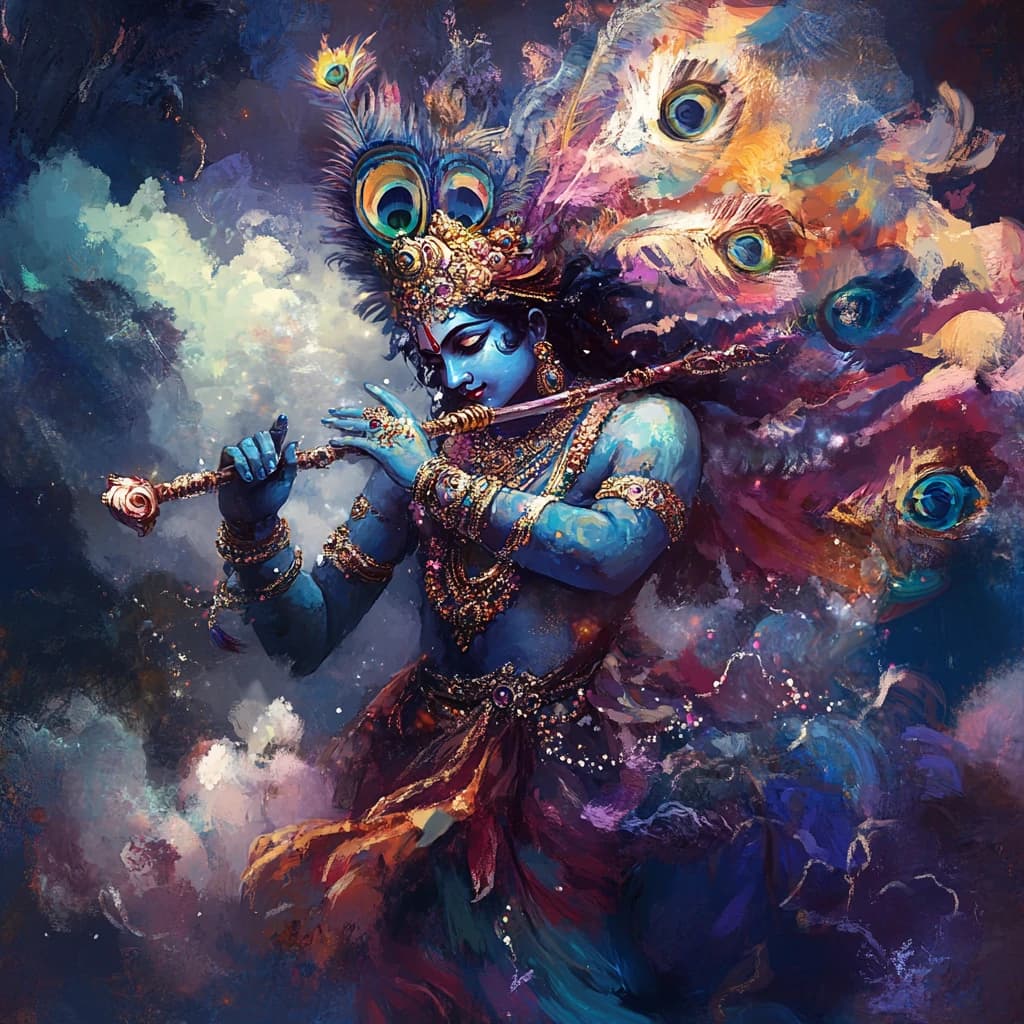
Pichwai painting takes its name from the large devotional cloths traditionally hung behind (pichhe) the idol (wai) in temples around Nathdwara, Rajasthan. What looks, from a distance, like a dense and symmetrical pattern is actually built up over weeks, in layers, almost entirely by hand.
The process starts with the cloth itself — treated with a mixture that stiffens the fabric and gives pigment something to grip. Artists then sketch the composition in charcoal before any color goes down, often working from motifs passed through generations of the same family workshop: lotus ponds, cows, peacocks, and scenes from Krishna's life.
Color comes next, applied in stages from background to foreground, using natural stone and mineral pigments mixed by hand rather than pre-made paints — a big part of why two Pichwai pieces are never quite identical, even when the subject matter is similar. Gold leaf, where used, is applied last, burnished by hand until it catches light from every angle.
A single mid-sized Pichwai piece can take anywhere from two to six weeks of studio time, depending on the density of the composition and how much gold leaf work is involved. It's slow, physically demanding work — and it's a big part of why we think the artist's name belongs next to the price, not buried in a product description.